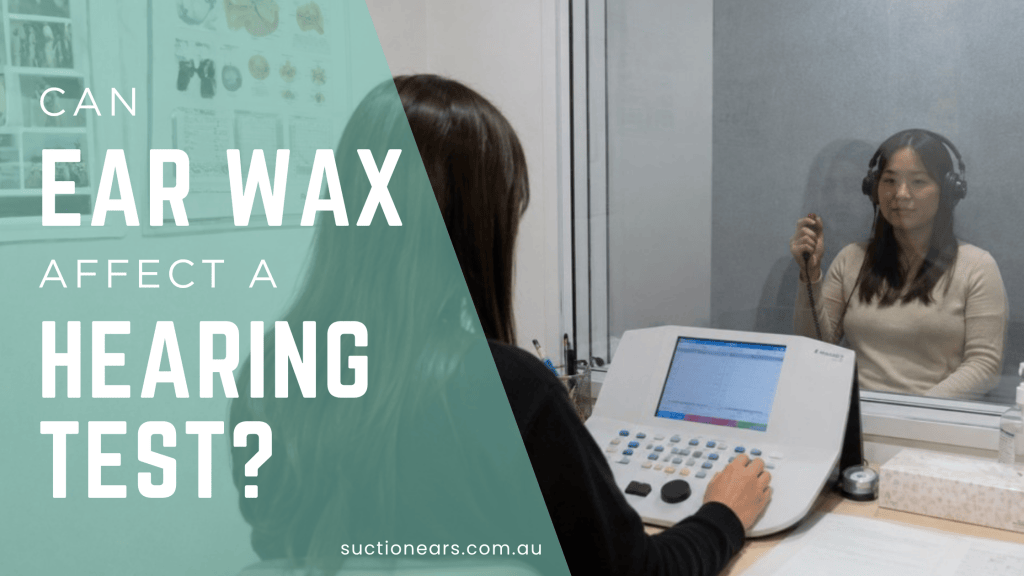
If you’re wondering about ear wax before hearing test appointments, you’re not alone. It’s a common question, especially if you’ve experienced ear wax build-up or blocked ears in the past.
The answer is sometimes, but not always.
Ear wax is a normal and healthy part of your ear, and most people don’t need to have it removed before a hearing assessment. However, if ear wax is blocking the ear canal, it can affect the accuracy of your hearing test and make it more difficult for your audiologist to fully assess your hearing.
At Suction Ears Audiology, we often see patients who book a hearing test because they’re concerned about hearing loss, only to discover that impacted ear wax is the main cause of their symptoms.
Can Ear Wax Affect a Hearing Test?
Yes. A significant build-up of ear wax can interfere with hearing test results by preventing sound from traveling efficiently through the ear canal to the eardrum.
This is known as conductive hearing loss, where sound is physically blocked before it reaches the inner ear. When this happens, hearing test results may not accurately reflect your true hearing ability.
Fortunately, once the wax has been safely removed, it’s often possible to obtain a much clearer picture of your hearing.
How Ear Wax Can Affect Your Hearing Assessment
A hearing assessment measures how well you detect and process sounds across a range of pitches and volumes. To obtain accurate results, sound needs to travel freely through the ear canal to the eardrum.
If impacted earwax is present, it may:
- Reduce your ability to hear softer sounds.
- Create the impression of hearing loss when the inner ear is functioning normally.
- Make speech sound less clear during testing.
- Affect how your audiologist interprets the results.
- Delay the diagnosis of an underlying hearing condition.
Removing significant ear wax before testing allows your audiologist to assess your hearing more accurately and determine whether any hearing loss is related to wax or another cause.
Your Audiologist Will Always Check Your Ears First
Before carrying out a hearing assessment, your audiologist should examine your ears using otoscopy, a simple procedure that uses a specialized light to inspect the ear canal and eardrum.
This examination helps identify anything that could influence your hearing test results, including:
- Ear wax build-up
- Ear infections
- Foreign objects
- Perforated eardrums
- Skin conditions affecting the ear canal
- Other abnormalities that may require further assessment
If significant ear wax is found, your audiologist may recommend removing it before proceeding with the hearing test to ensure the most accurate results possible.
What Happens If Ear Wax Is Found During My Appointment?
Not everyone with ear wax needs to have it removed before a hearing assessment.
If only a small amount of wax is present and your audiologist can clearly see your eardrum, testing can usually continue as planned.
However, ear wax removal may be recommended if the wax:
- Completely blocks the ear canal
- Prevents the eardrum from being properly examined
- Is likely to affect your hearing test results
Every patient is different, so your audiologist will decide the most appropriate course of action based on what they see during your examination.
Why Accurate Hearing Test Results Matter
A hearing assessment is designed to identify the underlying cause of your hearing concerns so the most appropriate treatment or management plan can be recommended.
Accurate results help determine whether your symptoms are related to:
- Ear wax build-up
- Middle ear conditions
- Inner ear hearing loss
- Age-related hearing loss
- Noise-induced hearing loss
- Other medical conditions affecting hearing
Without addressing significant ear wax first, it can sometimes be difficult to distinguish between temporary conductive hearing loss caused by wax and hearing loss arising from another condition.
Can Ear Wax Cause Temporary Hearing Loss?
Yes.
Impacted ear wax can temporarily reduce hearing by blocking sound from reaching the eardrum. Many patients notice an immediate improvement in hearing once the wax has been safely removed.
However, if hearing difficulties continue after ear wax removal, further testing can help determine whether another condition is contributing to your symptoms.
Why We Use Microsuction
If significant ear wax is found before or during your hearing assessment, microsuction ear wax removal is widely regarded as one of the safest and most precise methods of removing it.
Unlike traditional ear syringing or irrigation, microsuction uses gentle suction while the clinician views the ear canal under magnification throughout the procedure. This allows ear wax to be removed accurately while helping to minimize unnecessary contact with the delicate structures inside the ear.
Some of the benefits of microsuction include:
- No water introduced into the ear canal
- Precise removal under direct vision
- Suitable for many people with a history of ear surgery or a perforated eardrum
- Comfortable and efficient treatment for most patients
- Hearing tests can often be performed with greater confidence once significant wax has been removed
Before recommending ear wax removal, your audiologist will always examine your ears to determine whether the wax is likely to affect your hearing assessment.
Should I Try to Remove Ear Wax Before My Appointment?
In most cases, it’s best NOT to try removing ear wax yourself before your hearing test.
Using cotton buds, hairpins or other objects can push wax deeper into the ear canal, making it more difficult to remove and potentially affecting your hearing assessment. Ear candles are also not recommended, as there’s no reliable evidence that they’re effective and they can cause burns or injury.
If you suspect ear wax before hearing test appointments may be an issue, it’s better to let your clinician examine your ears first. If the wax appears particularly hard or dry, they may recommend using a wax-softening spray or drops for a few days before professional removal.
Who Should Consider Having Their Ears Checked Before a Hearing Test?
Although not everyone needs ear wax removed before a hearing assessment, some people are more likely to have wax that could interfere with testing.
You may benefit from an ear examination before your hearing test if you:
- Frequently experience ear wax build-up
- Wear hearing aids
- Have previously required professional ear wax removal
- Feel that your ears are blocked
- Notice reduced hearing in one or both ears
- Experience ringing in the ears (tinnitus)
- Have difficulty understanding speech
A simple ear examination can help identify any issues before testing begins, allowing your audiologist to provide the most accurate assessment possible.
The Bottom Line
If you’re concerned about ear wax before hearing test appointments, the good news is that most people don’t need to have their ears cleaned beforehand.
However, if ear wax is significantly blocking the ear canal, removing it first can improve the accuracy of your hearing assessment and help your audiologist determine whether your symptoms are caused by wax or another hearing condition.
It’s also important to remember that hearing changes aren’t always caused by ear wax. If your hearing difficulties continue after wax has been removed, or if you experience persistent hearing loss, tinnitus, ear pain or other concerning symptoms, further assessment is important to identify the underlying cause.
If you’re unsure whether ear wax may affect your hearing test, a professional ear examination is the safest place to start.
Preparing for a hearing test or concerned that ear wax may be affecting your hearing?
At Suction Ears Audiology, our experienced audiologists can examine your ears, determine whether ear wax is likely to affect your hearing assessment and recommend the most appropriate next step. If ear wax removal is needed, we provide gentle microsuction ear wax removal for adults and children aged five years and over across multiple Melbourne locations in the south and south-east.
Whether you need a hearing assessment, professional ear wax removal or simply peace of mind, we’re here to help.
Frequently Asked Questions
Can a hearing test be performed if I have ear wax?
Yes. If only a small amount of ear wax is present and it isn’t blocking the ear canal or affecting your hearing, testing can usually proceed as planned. If the wax is significant, your audiologist may recommend removing it first.
Will removing ear wax improve my hearing?
If impacted ear wax is causing a blockage, many people notice an immediate improvement in hearing once it has been safely removed. If hearing difficulties continue afterwards, further testing can help identify another possible cause.
Is microsuction safe before a hearing test?
Yes. Microsuction is a commonly used method of professional ear wax removal that allows your clinician to remove wax under direct visual guidance. If ear wax is affecting your hearing assessment, microsuction can help ensure more accurate test results.
Should everyone remove ear wax before a hearing test?
No. Most people don’t need ear wax removed before a hearing test. Removal is generally only recommended if the wax is excessive, impacted or likely to interfere with the examination or hearing assessment.
Can ear wax cause temporary hearing loss?
Yes. Significant ear wax build-up can temporarily reduce hearing by blocking sound from reaching the eardrum. Once the wax has been safely removed, hearing often returns to its previous level if no other hearing condition is present.
Related Articles
To learn more about ear wax and hearing health, you may also find these articles helpful:
- How Often Should You Get Your Ears Professionally Cleaned?
- Why Do My Ears Keep Blocking Up?
- Understanding Ear Wax Function (And Why It’s Actually Good for You)